

Industrial Valves for Water Flow Control & Pipeline Efficiency
A pipeline with no valves is just a pipe. Either water flows through it or it doesn’t. You can’t control its direction, volume of flow, effects of pressure reversal, or isolation of segments for maintenance and repair. The valves are what make a pipeline a system.
This concept is widely understood by the people engaged in installing pipelines. The trouble comes with the selection. What type of valve is needed at a pump discharge is not the same that is required at the end of a field irrigation pipeline. What type of materials is suitable for chlorinated municipal water pipeline is not the same as needed for chemical process lines. It’s not always immediately evident when such mistakes have been made, sometimes it becomes evident only after two years, when a seal breaks, or a valve body cracks due to incompatibility with chemicals or a pump breaks down because of uncontrolled backflow through unprotected lines.
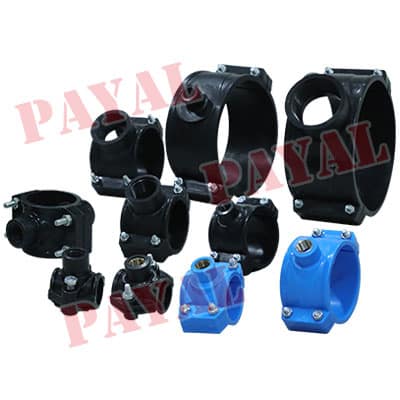
Non Return Valves: Protecting the System From Itself
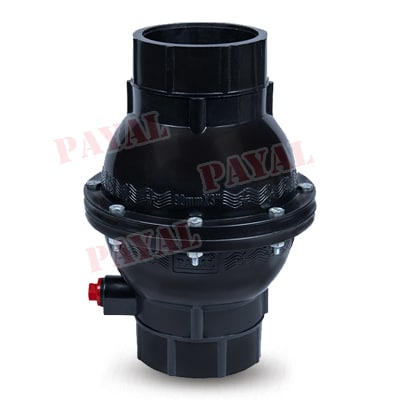
Backflow is one of those pipeline problems that seems theoretical until it causes real damage. A pump stops and the water column in the rising main falls back Pressure reverses.
Without protection, that reverse flow hits the pump, creates water hammer, and over time damages equipment that was never designed to handle flow in that direction. A Non Return Valve Flange End sits in the line and allows flow in one direction only. When forward pressure drops and reverse flow begins, the valve closes. The pump is protected. The system pressure stabilises rather than spiking.
Flanged-end connection is not an arbitrary specification. Flanged connections distribute mechanical stress across the full bolt circle rather than concentrating it at threads.
For larger bore applications, for pump outlets under regular pressure cycling, or for installations where the valve will be removed for maintenance periodically, flanged connection is the appropriate design. Getting the connection type right is as important as getting the valve function right.
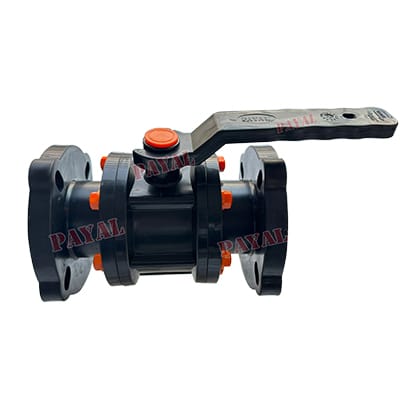
PP Flanged Valves: Where Chemical and Moisture Resistance Matter
Polypropylene is not the most glamorous engineering material but it solves specific problems very well. In environments where metal corrodes, where chemical compatibility with mild acids, fertiliser solutions, or treated water is a concern, or where weight reduction matters across a large installation, PP makes sense.
A PP Flanged Valve brings corrosion resistance that metal alternatives cannot match in these environments without expensive coatings or alloy upgrades. The flanged connection maintains the structural integrity that threaded PP connections sometimes sacrifice under pressure cycling.
The selection caveat is real. PP has temperature and pressure limitations that metal does not. For high-temperature process applications or very high-pressure systems, PP is not the right material. For agricultural chemical dosing lines, irrigation networks with treated water, and similar moderate-duty applications where the chemical environment rules out metal, it is often exactly right.
UPVC Ball Valves: Simple, Effective, and Appropriate for Most Shut-Off Requirements
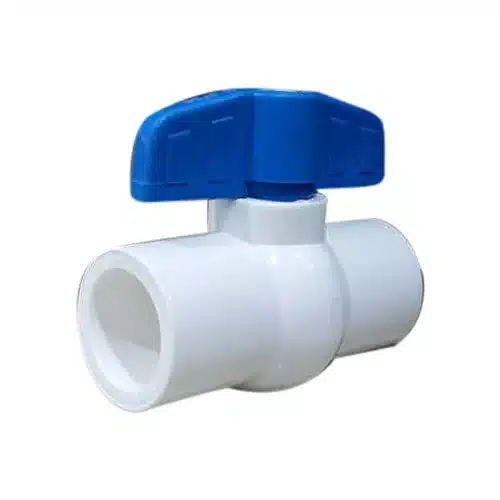
A ball valve works because it is mechanically simple. Quarter turn from fully open to fully closed. No complicated mechanism. No partial-open positions that create turbulence and erosion. When it is open, flow is unrestricted through the full bore. When it is closed, the seal is positive.
UPVC Ball Valve construction adds chemical and corrosion resistance to that mechanical simplicity. For irrigation systems, water distribution, plumbing, and light industrial utility applications, UPVC ball valves handle the duty requirements without the weight or cost of metal alternatives.
The applications where UPVC ball valves do not belong are high-temperature lines and very high-pressure systems. Within their rated conditions they are reliable, low-maintenance, and easy to operate manually over many years.
Male Female Ball Valves: Connection Flexibility in Tight Spaces
Not every pipeline runs in straight sections with identical connection points on both sides of every valve. Retrofits, repairs, and non-standard configurations create situations where the connection on one side of a valve needs to be different from the other.
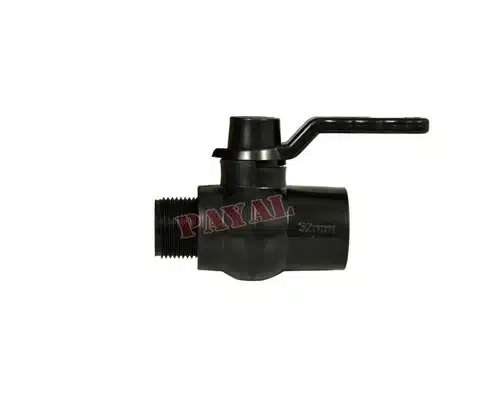
A Male Female Ball Valve has different threaded configurations on each end, male on one side and female on the other. This is not a feature that matters in every installation. But in a retrofit where the existing pipework has a specific thread configuration that a standard valve cannot accommodate without additional adaptors, it solves the problem cleanly. Fewer joints means fewer potential leak points.
Choosing Correctly Before Installation
The factors that determine valve selection are consistent across all valve types. Pipe size must match the valve bore. Operating pressure must fall within the valve pressure rating. Fluid characteristics, temperature, chemical content, solid content, must be compatible with the valve material. Connection type must suit the existing pipework and the mechanical stresses the joint will face. And the valve function must actually match the system requirement.
That last point catches people. A ball valve is a shut-off device. It is not designed for flow regulation in a partially open position over time. A non-return valve prevents backflow but does not shut off flow on demand. Using the wrong valve type for the application creates problems that the correct installation of an incorrect product cannot prevent.
FAQs
Allows flow in one direction only and closes against reverse flow. Protects pumps and equipment from water hammer and backflow damage. Flanged-end design suits larger bore and high-cycle applications.
For applications where chemical compatibility, corrosion resistance, and weight matter more than high-temperature or extreme pressure performance. Agricultural chemical lines and treated water distribution are typical fits.
Irrigation, water distribution, plumbing, and light industrial utility lines within UPVC’s rated pressure and temperature range. Reliable shut-off with minimal maintenance.
A ball valve with male threading on one end and female on the other, providing connection flexibility in retrofits or non-standard pipeline configurations where standard valves require additional adaptors.
Pipe size, operating pressure, fluid characteristics, connection type, and what the valve actually needs to do in the system. Wrong valve type for the application causes problems that correct installation cannot fix.