

How to Select HDPE Pipe Fittings for Pipeline Projects
Pipeline failure is almost never related to the piping itself. You would get the same answer if you asked any irrigation engineer or municipal water contractor. Pipeline leaks, pressure drops, pipeline system failure. The most likely culprit? It’s almost always a fitting. It may have been an improperly-rated coupling.
Or a reducer, which introduced flow turbulence and wore out the connection over time. A saddle that seemed okay at first but began to leak after six months.
The pipe is the easy part. Fittings are where projects either hold together or do not.
Why HDPE Became the Default Choice
High-Density Polyethylene revolutionized water distribution and irrigation systems in the past decades due to the fact that it resolved issues posed by metallic pipes and rigid PVC. Long-term corrosion resistance. Ability to flex without breaking despite ground movements. Chemical resistance that matters in agricultural and industrial applications where water chemistry is not neutral. Lightweight enough to reduce installation labour significantly without sacrificing strength.
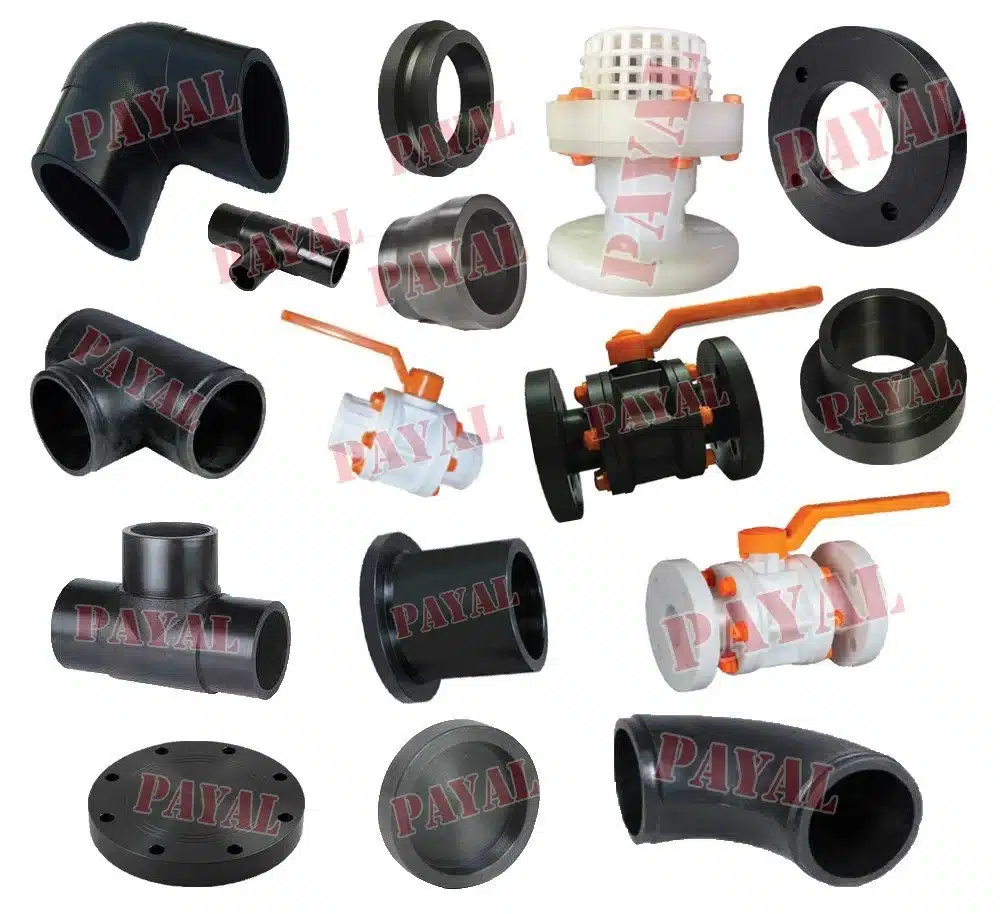
HDPE Pipe Fittings are not one product. They are a category covering everything needed to build, extend, branch, and reduce a pipeline network. Each type does a specific job, and choosing the wrong one for a particular application creates problems that become expensive to fix after installation is complete.
Couplers: Where Two Sections Become One
The common fitting need during pipe installation is connecting pipe segments. HDPE Pipe Couplers can do the task, although the nature of the connection will dictate the overall performance of the pipeline system in terms of pressure.
A poorly manufactured coupler with inconsistent wall thickness or inadequate sealing surface creates a weak point. Under sustained pressure, or with temperature variation that causes expansion and contraction, that weak point becomes a leak point. In a municipal water distribution system or a large agricultural irrigation network, tracking down and repairing coupler failures across buried pipe runs is not a minor inconvenience.
Quality couplers provide consistent sealing performance across the full pressure range the pipeline is designed for. That consistency is what the application requires, not just performance under ideal conditions.
Reducers: Managing the Transition Between Sizes
Pipeline networks are rarely uniform diameter throughout. Distribution systems branch and reduce as they move from main lines to service connections. Agricultural systems vary diameter between primary runs and field laterals. Industrial systems transition between process sections with different flow requirements.
An HDPE Spigot Reducer manages these transitions. The engineering requirement is straightforward: connect different diameters without creating turbulence that causes pressure loss or erosion at the joint. A reducer that does not maintain smooth flow geometry through the transition creates exactly this problem, and the effects compound over the operational life of the system.
Dimensional accuracy matters here more than people appreciate at specification stage. A reducer that is slightly out of tolerance creates stress at the joint that accelerates fatigue. Proper wall thickness through the transition zone maintains pressure integrity under load.
Brass Service Saddles: Adding Branches Without Disrupting the Main
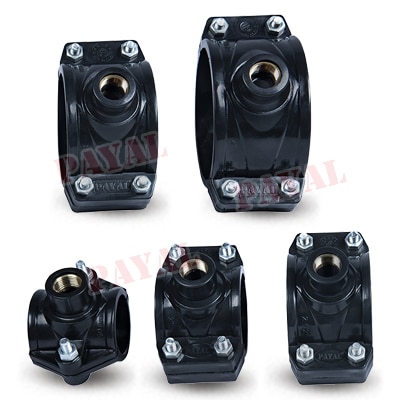
One of the most practical requirements in any distribution system is the ability to add service connections to an existing main line without replacing pipe or interrupting supply. This is exactly what an HDPE Brass Service Saddle is designed for.
The saddle clamps to the outside of the main pipe. The brass threaded outlet provides a durable, corrosion-resistant connection point for the service line. Installation does not require cutting the main or taking the system offline. In municipal water distribution where continuous supply is a service obligation, that matters considerably.
Brass is used for the outlet specifically because threaded connections in plastic wear under repeated assembly and disassembly. Brass holds thread integrity across the service life of the fitting in a way that plastic alternatives do not.
Choosing Correctly Before Installation
The time to verify fitting selection is before the pipe is in the ground. Pressure rating compatibility with the pipeline specification. Dimensional match with the pipe outside diameter. Material certification for the application environment. Quality standards compliance. Manufacturer track record.
These are not bureaucratic checkboxes. They are the factors that determine whether a pipeline works reliably for its intended operational life or requires expensive intervention years before it should.
FAQs
Connecting, extending, branching, and reducing HDPE pipelines across irrigation, municipal water supply, industrial process, and infrastructure applications.
Joins two pipe sections with a leak-proof, pressure-rated connection. The quality of the coupler determines the reliability of that joint under sustained operational conditions.
To transition between different pipe diameters while maintaining smooth flow and avoiding turbulence-related pressure loss at the junction point.
It allows branch connections to be added to existing main lines without cutting pipe or interrupting supply. The brass outlet provides durable threaded connection performance that plastic cannot match over time.
Match pressure rating and dimensions to the pipeline specification. Verify material quality and standards compliance. Buy from a manufacturer with documented industry experience. The fitting is not where a pipeline project should compromise on cost.