

PVC Service Saddles & Pipe Fittings for Efficient Water Distribution
People do not think about pipe fittings until there is a problem. There is a leak in the irrigation pipe in a field after three weeks of planting season. There is a weeping joint of the branch line on a municipal main and no one knows why it passed the inspection test. The outlet thread joint of a service saddle gets stripped during normal maintenance operations and now the entire assembly must be replaced.
In each of these scenarios, the underlying cause of the problem is a pipe fitting selection done prior to installation. Fitting size, pressure rating, materials for thread joints, and sub-standard components that only failed when they were put under stress. PVC pipe fittings may not be fancy but they are the backbone of the water distribution system.
What PVC Fittings Are Actually Doing
A water distribution network is not one continuous piece of pipe. It is hundreds or thousands of individual sections connected, branched, directed, and terminated by fittings. Each one of those connections is a potential failure point if the fitting is wrong for the application.
PVC became the dominant material for irrigation and distribution fittings because it solved the problems that metal created. Corrosion does not happen. Weight is manageable across large installations. The material handles moisture exposure indefinitely without degrading. Chemical resistance covers most agricultural and municipal water chemistry. For environments where fittings are buried, exposed to soil, or continuously wet, these are not minor advantages.
Service Saddles: Adding Branches Without Rebuilding
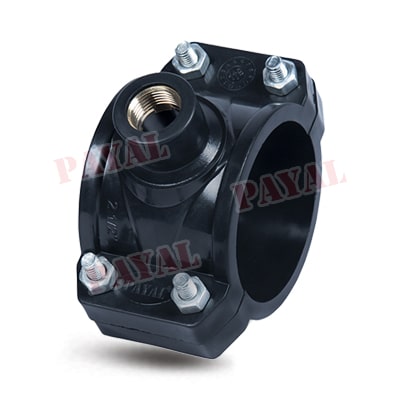
The most practical thing a PVC Service Saddle does is allow a branch connection to be added to an existing main line without cutting the pipe or taking the system offline. The saddle clamps around the outside of the main. A hole is tapped through the pipe wall at the outlet point. The service line connects through the saddle.
This matters in agricultural systems where field layout changes, where additional growing areas are added mid-season, or where the original design did not anticipate every connection point that eventually proved necessary. It also matters in municipal distribution where continuous supply is a service obligation and interrupting the main for every new connection is not operationally acceptable.
A properly fitted PVC Service Saddle creates a connection that seals reliably and holds under the operating pressure of the main. An improperly fitted one, whether the wrong size for the pipe outside diameter or a poor-quality saddle body that does not clamp evenly, creates a slow leak that grows over time.
Connectors and Joint Connectors: Where Sections Meet
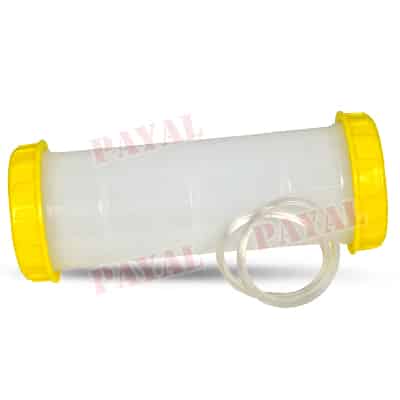
Every joint in a pipeline is a decision. A PVC Pipe Connector joining two pipe sections seems straightforward until the connection is under sustained pressure with seasonal temperature variation causing the pipe to expand and contract. The connector has to maintain sealing performance through all of that.
A PVC Pipe Joint Connector is the same principle applied to the joint itself. Dimensional accuracy matters. If the fitting is slightly out of tolerance for the pipe it is connecting, the seal is compromised from the first day of operation. Pressure loss starts. The joint becomes the weak point that eventually fails.
In large irrigation networks where water needs to reach the end of the distribution run at adequate pressure, every fitting that introduces unnecessary resistance or leakage reduces efficiency across the whole system. The losses compound.
When Stainless Steel Thread Makes the Difference
Standard PVC threads work under normal conditions. But threaded connections that are assembled and disassembled for maintenance, or that operate in environments with continuous moisture exposure, can wear faster than the saddle body itself.
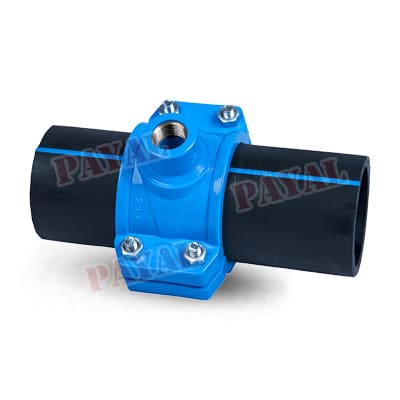
A Blue Service Saddle SS 304 Thread addresses this by using a stainless steel threaded insert at the outlet. SS 304 holds thread integrity across repeated assembly cycles in a way that plastic cannot match over time. The saddle body remains PVC for its corrosion resistance and weight advantages. The thread, where mechanical wear actually occurs, is the stronger material.
For municipal connections that require periodic access, or agricultural systems where service lines are disconnected seasonally, this combination makes practical sense.
FAQs
Creates a branch connection from a main pipeline without cutting the pipe or interrupting supply. The saddle clamps to the outside and provides an outlet for the service line.
Joining sections of PVC pipe within a water distribution or irrigation system. Connection quality directly affects whether that joint maintains integrity under sustained operational pressure.
Because every joint is a potential failure point. Properly sized, quality joint connectors maintain sealing performance and reduce pressure loss across the distribution network.
A service saddle combining a PVC body with a stainless steel threaded outlet. The SS 304 thread handles repeated assembly cycles and moisture exposure better than plastic threading alone.
Agricultural irrigation, municipal water distribution, landscaping systems, plumbing installations, and any pipeline application where corrosion resistance, weight, and long service life matter.